

Texture is one of the hardest things to discuss across a supply chain, because the vocabulary is visual and the physical cause is mechanical. A team sees a surface that looks slightly flatter than the approved sample and reaches for adjectives. The manufacturing partner reaches for a tooling set. Between those two positions sits a document almost nobody keeps: a register of the embossing plates or rollers in use, with a version history and a dated change log.
This guide is for private-label flooring teams coordinating texture tooling with a manufacturing partner. It explains how to identify tooling, what to record when it changes, and how the register shortens a texture conversation. It is editorial recordkeeping guidance only: it is not a Benchwick tooling policy, a plate specification, a tolerance, a maintenance interval or a quality acceptance standard.
Give the tooling its own identity
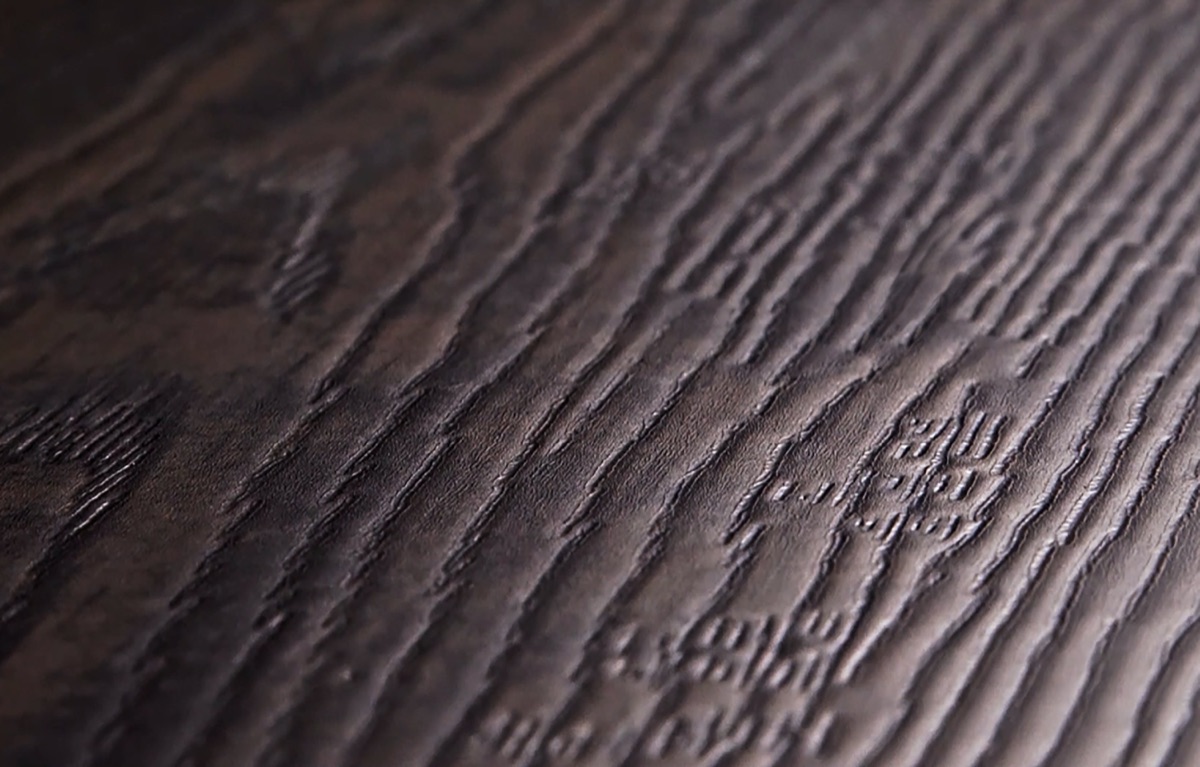
An embossing plate or roller set should have an identifier that is not the product name and not the texture's marketing name. The product name describes what is sold; the texture name describes an appearance; the tooling identifier describes the object that pressed the surface. When all three collapse into one word, a change to any of them looks like a change to all of them.
Record the identifier once, in one place, and reference it everywhere the tooling is discussed. Where the partner uses an internal number, record that number as given rather than inventing a parallel scheme, and note who supplied it. The register's value depends on the identifier being the partner's, because the partner is the party who can search it.
Separate the four things a register tracks
A working register is smaller than people expect. It tracks which tooling is in use, which version of it, what has been done to it, and when. Everything else, including appearance approvals, belongs in the sample and surface records that already exist elsewhere. The table below is a workable minimum.
The distinction in the right-hand column is what keeps a tooling register readable. Once a register starts carrying appearance judgements, it stops being a lookup and becomes an argument, and arguments are edited by whoever last disagreed with them.
| Field | What belongs there | What does not |
|---|---|---|
| Tooling identifier | The partner's number for the plate or roller set | A product name or a texture adjective |
| Program reference | The program or product line the tooling serves | A customer name used as a substitute |
| Version | A sequential version with the date it took effect | An informal "new" or "old" label |
| Change entry | Date, what changed, who confirmed it | A diagnosis of why the surface differs |
| Status | In use, spare, retired, under review | A quality judgement on the product |
| Linked evidence | Dated photographs of the tooling itself | Marketing images of a finished floor |
Record a change on the day it is confirmed
Tooling changes are usually communicated in passing: a reface was needed, a plate was replaced, a spare came into use. Each of those is a version event, and each one is easy to lose because it arrives inside a conversation about something else. Write the entry when it is confirmed, in one line: date, identifier, what changed, who confirmed it.
Do not rewrite earlier entries. A register that shows three sequential versions, each with a date, explains a surface difference far better than a register that has been tidied into a single current state. Where an entry turns out to be wrong, add a correction line and keep the original visible, so a later reader can see both the record and its correction.
Connect tooling to batches without merging the records
The question that eventually arrives is which tooling produced a given batch. Answer it with a link rather than a merge: the batch record keeps its own identifiers and the tooling register keeps its own, and a dated reference connects them. Merging the two into one document usually damages both, because the fields that matter for a shipment are not the fields that matter for a plate.
Where the program uses more than one texture tooling set, record which set is associated with which product line and when that association started. Private-label programs change scope more often than they change tooling, and an association that is not dated becomes an assumption about every earlier batch.
Keep the register findable and short
A register that lives in one file, with one row per tooling set and one line per change, is usable by someone who was not involved in creating it. A register spread across three threads, two presentations and a photograph folder is not a register; it is a filing problem with a texture discussion attached.
Review it once a quarter against the program list, retire identifiers that are no longer in use without deleting them, and keep the dated tooling photographs with their identifiers. The Benchwick innovation pages describe the synchronized embossing and digital printing context these records sit inside; the register itself is the team's own working document. Confirm tooling identifiers, versions and change notifications with the manufacturing partner, and treat their confirmation as the authority over any entry.
Frequently asked questions
What is an embossing plate record?
+
A register that identifies each texture tooling set used for a program and tracks what changed on it: a reface, a repair, a replacement, a retirement. It is an identifier and a history, not a specification, and it does not by itself describe the texture it produces.
Why not simply refer to the texture by its marketing name?
+
Because a name describes an appearance, while tooling describes a physical object that wears and changes. Two plates can carry the same look name across a program's life, and a record keyed only to the name cannot tell a reader which physical tooling produced a given batch.
Should the record include photographs?
+
Yes, if they are dated and labelled with the tooling identifier rather than the product name. A photograph of a plate is evidence about the plate; a photograph of a floor is evidence about a floor. Keeping the two sets separate stops one from standing in for the other.
How is the register useful when a texture question arises?
+
It turns the question into a lookup: which tooling, which version, which change, which date. That is usually enough to decide whether a difference is expected from a tooling change or needs a separate conversation with the manufacturing partner.