

The first article is the moment a program stops being a proposal. Until then, everything has been a sample made to show what is possible. The first article is made on the production tooling, from production material, at something close to production speed, and the decision taken about it releases a line.
This guide is for private-label flooring teams reviewing that first off-tool sample with a manufacturing partner. It sets out how to keep a review record that stands up months later, when a pallet arrives and someone asks what was actually approved. It is editorial recordkeeping guidance only: not an inspection standard, a sampling plan, an acceptance criterion or a production policy, and it replaces no document issued by a manufacturing partner.
Name the document the article was checked against
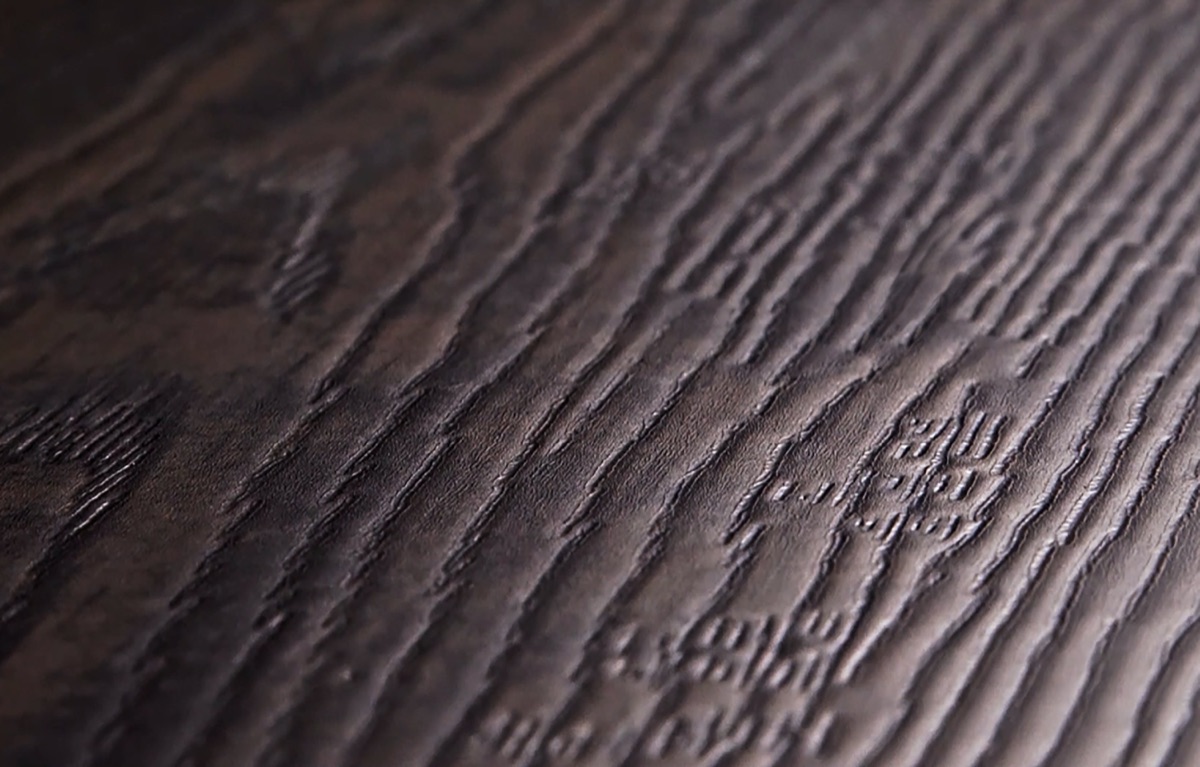
A first article review is a comparison, and a comparison needs a fixed side. State the specification version, the artwork version and the sample reference that define what the article should have been. Without that, the review compares the article against whatever is in the room, which is usually the most recent sample rather than the agreed document.
Record the versions as identifiers, not as dates. A specification revised twice in one month is not distinguishable by month alone, and "the March spec" is a description of a memory. Where the surface technology itself is the subject of the review, name it precisely, since a printed panel described as Blue Eleven or DSE is making a claim about a process that the record should tie to a document rather than to a name heard in a meeting.
Separate what was examined from what was accepted
Every review has a scope, and most scopes are narrower than the decision they end up supporting. Colour, surface relief, dimensions, edge treatment, core appearance, print registration and packing are usually examined by different people, sometimes on different days. A record that says "first article approved" without listing the scope will later be read as consent to everything on the pallet.
List the attributes and mark each one examined, not examined or open. The table below is a workable shape for a single article.
| Attribute | Record against | What the entry should say |
|---|---|---|
| Surface appearance | Specification version and reference sample | What was compared, side by side or from memory |
| Surface relief | Named texture or tooling reference | Which face and which light it was read under |
| Dimensions | Published or agreed nominal values | The measured values, not a pass or fail word |
| Edge and end treatment | Specification detail | Whether it was examined at all |
| Core and backing | Construction description | Whether it was visible or sectioned |
| Marking and packing | Artwork and packing instruction | Which version the carton referenced |
Write the measurements down as numbers
A review that records "dimensions acceptable" has recorded an opinion. A review that records the measured value has recorded evidence, and evidence can be compared with the next article without re-opening a conversation. Where a measurement was taken with a hand tool rather than an instrument, say so, because the difference matters when a value sits close to a limit.
Photograph the article and the reference sample in the same frame, under the same light, and label the image with the article identity rather than the product name. A photograph of two surfaces is evidence about a comparison; a photograph of one surface is evidence about a surface.
Give a conditional release a closing condition
Many first articles are accepted with conditions: a relief that needs another pass, a carton panel awaiting reprint, a dimension to confirm on the next article. Those conditions are the useful part of the record, and each needs an owner and a closing date. A conditional release written as a clean pass is the most common way a review stops meaning anything, because the conditions survive only in the memory of whoever raised them.
Close the record when production lands
When the first production run arrives, compare it against the reviewed article rather than against the sample, and note the comparison date. Record what matched and what did not, including a dated line saying nothing varied. That line is what makes the next comparison meaningful, and it takes a minute to write at the time and an afternoon to reconstruct later.
File the record with the specification versions, the artwork approvals and the trial run notes for the same program, in date order. The specification says what the product should be, the article record says what was seen and accepted, and the run notes say what was actually produced. Together they answer a release question in minutes instead of a week.
Confirm the current review requirements with the manufacturing partner before each program, since documents, tooling and packing instructions are revised on their own schedules. The record does not set those requirements. It makes the agreed version findable, which is what turns a first article review into a decision rather than a meeting.
Frequently asked questions
What makes a first article review different from a sample approval?
+
Timing and scope. A sample approval accepts something made to demonstrate a possibility; a first article review accepts something made on the production tooling, at production speed, from production material. The second is a decision about releasing a line, so it should name the specification it was checked against rather than relying on the earlier sample.
Should the review reference the development sample?
+
Yes, as a comparison, not as the standard. Note which sample was used for side-by-side comparison and which specification version defines acceptance. If the sample and the specification disagree, the specification wins, and the note should say so explicitly so nobody re-argues it later.
What belongs in the record if the article passes?
+
The same things as a rejection: what was examined, against which document version, by whom, on what date, and what was explicitly not examined. A pass that lists only the outcome cannot be audited, and a later complaint about something outside the reviewed scope will look like an oversight rather than a known gap.
How should a conditional release be recorded?
+
As a pass with stated conditions and an owner for each. Write the condition, what evidence will close it and by when. A conditional release recorded as a clean pass is the most common way a first article review quietly stops meaning anything.